

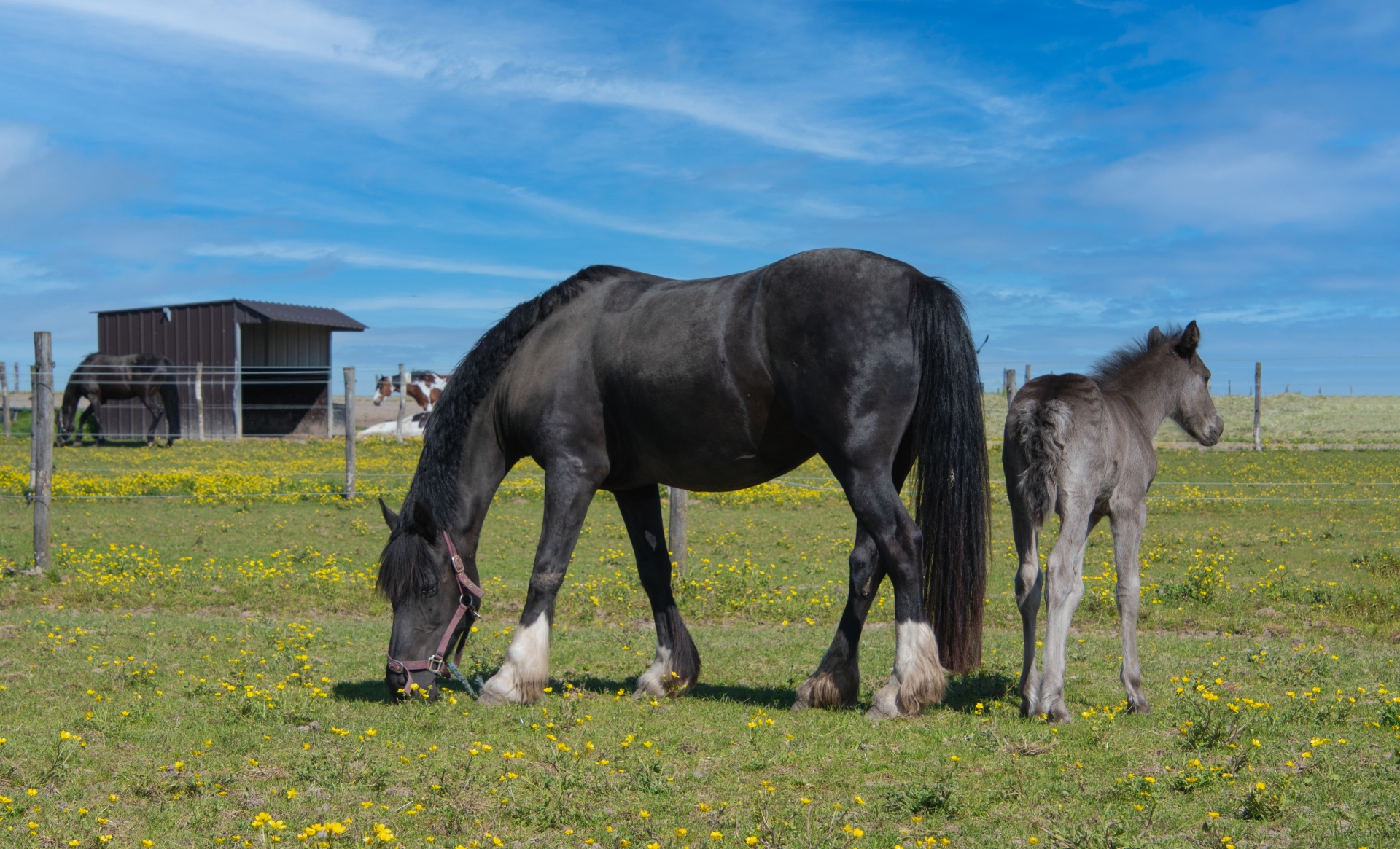
Record what the youngster actually eats, then review growth, condition, and the complete ration with your veterinarian or equine nutritionist.
Extension management guidance, not a new clinical trial: Oklahoma State fact sheets published February 2017 and September 2020. Individual growth and feeding needs vary.
Bigger is not a feeding target
When two weanlings stand together, it is tempting to compare their size before asking anything else. A weanling is a young horse under a year old that has been separated from its dam. For breeders developing future riding horses, the better question is whether each youngster is growing appropriately for its own frame and circumstances.
Oklahoma State University’s guidance emphasizes moderate body condition and balanced nutrition. It warns against extremes of thinness or fatness, abrupt changes in growth, and unbalanced rations. Genetics, exercise, and nutrition interact; feed cannot simply manufacture a different mature horse. The university also notes limits to general recommendations because young horses differ substantially.
Write down the complete ration
Before a professional feeding review, list every source of feed: forage, concentrate, supplements, and pasture access. Record weights rather than relying only on the size of a scoop. Bring feed labels and explain how the youngster is fed, including whether another horse can displace it. The ration means the whole daily diet, not just the contents of the grain bucket.
OSU’s weanling guidance identifies a common problem: adding plain grains to a commercially formulated mix can upset its nutrient balance. Its growth fact sheet explains that energy, protein, and minerals must be considered together. Ask a veterinarian or qualified equine nutritionist to assess the actual combination before adding another product or trying to speed growth.
Make the follow-up repeatable
A practical record could include a dated photograph from the same side, the weight or weight estimate obtained by the same method, the feeds offered, and any change in appetite or movement. Keep the record consistent enough to show a trend. One photograph or one measurement cannot establish that a youngster’s development is normal.
Schedule the next review when you agree on the feeding plan. If the horse stops eating well, develops joint swelling, or appears sore, contact the veterinarian promptly instead of waiting for the next routine measurement. Do not restrict feed and then attempt rapid catch-up growth to make a sale or showing deadline.
Use guidance at the right scale
These sources are established Extension publications from 2017 and 2020, not a new trial proving one ideal diet. Their feeding examples are not an individual prescription. The useful outcome is a balanced plan, suitable management and exercise, and regular reassessment of the youngster in front of you.
Sources & further reading
Sources checked November 20, 2026. These are the underlying sources; MDhorse’s article is an original explanation.